People first, AI second: keeping design human

I recently completed an IxDF course, “AI for designers,” which tackled a variety of topics around utilising AI in the best way possible to evolve and optimise the way we design digital experiences.
The challenge? Finding the right balance. How can we embrace the benefits of AI without compromising user trust, design quality or the human thinking that makes great experiences possible?
From automating repetitive tasks to creating personalised user journeys, the opportunities are exciting. But as AI becomes a bigger part of our products and processes, we need to think beyond what it can do and consider how we use it responsibly. Responsible use of AI was a core theme that was mentioned on multiple occasions, but what does that mean? What are AI ethics? I dug deeper to explore this.
Build trust into the experience
Trust needs to be prioritised from the very beginning.
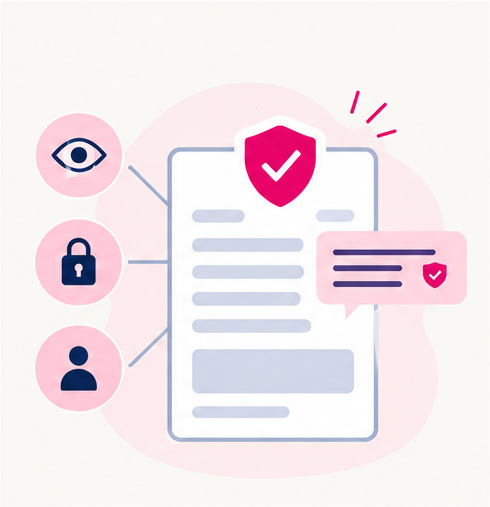
When designing AI-powered experiences, users should be aware of what the system can do, what it can't do and how their information is being used. If an AI tool makes recommendations, for example, users need to know that these are suggestions rather than guaranteed answers.
Transparency matters too. People should be able to understand when interacting with AI, why a recommendation has been made and when they may need to question the result. Privacy, security and safety should be part of the design process, not an afterthought.
After all, an experience that looks impressive but leaves users feeling uncertain isn't a good experience.
A framework for trustworthy AI
So, how do we assess whether an AI-powered product is trustworthy?
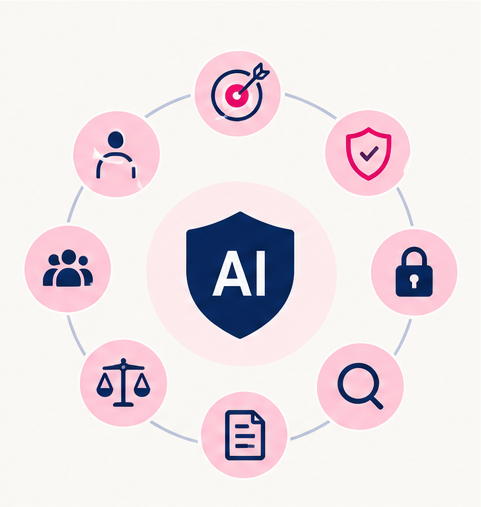
The National Institute of Standards and Technology (NIST) identifies seven characteristics of trustworthy AI systems. These provide a useful framework for designers and product teams to challenge their decisions and identify potential risks.
- Valid and reliable: Does the system produce accurate, consistent results in the situations where people will use it?
- Safe: Could its outputs or behaviour cause harm to users?
- Secure and resilient: Can it protect information and respond appropriately when something goes wrong?
- Accountable and transparent: Is it clear how the system operates, and who is responsible for its outcomes?
- Explainable and interpretable: Can users understand the system's recommendations and what they mean?
- Privacy-enhanced: Is personal information protected and only used where appropriate?
- Fair, with harmful bias managed: Could the system disadvantage certain people or reinforce existing biases?
Find out more about these seven characteristics on the official NIST AI Risk Management Framework website, or the UK Gov equivalent.
These aren't simply boxes to tick before launch. They should inform decisions throughout the design process, from the initial concept through to testing and ongoing optimisation.
Not every AI product carries the same risks, so the level of scrutiny should reflect its purpose and potential impact. Asking these questions early can help teams spot problems before they reach users.
Automate the tasks, not the thinking
AI can be a brilliant tool to make the design process more efficient. It can help generate ideas, create design variations, summarise research and take care of repetitive tasks that consume valuable time.
However, efficiency doesn't automatically equal better design.
It's tempting to automate as much as possible, particularly when a tool promises to deliver results in seconds. But some tasks rely on context, empathy and judgement that shouldn't be handed over without careful consideration. Weigh in on what information you’re putting online, especially if dealing with sensitive information – what security risks might you be posing to your design or content? What might you have not mentioned that’s essential to a brand, for example, tone of voice, that AI may not be aware of for your specific project? When summarising workshops or usability testing feedback, AI can be extremely helpful with summarising and consolidating audio recordings and notes, but it won’t replace the human ability to identify nuances from the testing – where have users hesitated, looked confused or frustrated?
AI might help analyse user feedback and identify common frustrations. But understanding why those frustrations exist, deciding which problems matter most and determining how to address them still requires human input.
The goal isn't to automate everything. It's to make deliberate decisions about where AI adds value and where human involvement is essential.
Keep people at the centre
AI will continue to evolve, and the opportunities for designers will grow alongside it. But the fundamentals of good design remain the same: understand your users, identify the problems worth solving and create experiences that deliver meaningful value.
Use AI to remove friction from your workflow, explore possibilities and make better-informed decisions. Challenge its outputs, test your assumptions and make sure the results work for real people.
Ultimately, responsible AI design isn't about what we can automate. It's about what we should automate, what we need to protect and how we create better experiences as a result.
Looking for digital experiences that are designed for humans, by humans? Reach out at hello@eclipsegroup.co.uk to explore usability testing, CRO and experimentation opportunities.