Overcoming the CRO Skills Shortage for Agencies vs In-House Teams

A staggering 59% of the UK’s working population are unable to carry out the 20 digital tasks considered essential for work in today’s corporate world.
Rapid technological change also means the skills needed for work are in flux, widening the gap between supply and demand.
This is having a massive impact on the CRO industry, both in-house and for agencies.
- It’s taking a lot longer to find and hire people with the right skills. This leaves businesses without the resources they need to run testing programmes, causing them to underperform, stall or stop.
- Salary expectations are rising. This increases department costs and, in turn, the ROI that needs to be delivered. Smaller companies, in particular, are struggling to attract and afford talent when competing with larger, more well-known companies.
- Efforts to upskill in-house teams aren’t keeping pace with demand. In-house CRO teams are often already stretched and lack subject matter specialists. Upskilling employees is difficult and slow, especially when they already have full-time commitments in their existing roles.
The debate about whether to build an in-house team, hire a CRO agency, or use a hybrid model rages on. But this debate must factor in the talent shortage and how it impacts businesses and their options at different stages.
This article explores the most effective approach to overcoming the skills shortage. It presents real-life case studies comparing approaches, uncovers common myths, and offers a model to guide conversations about talent — agency or client-side.
Myths about outsourcing vs in-housing
There are three persistent myths surrounding outsourcing vs in-housing.
Myth 1: In-house teams are cheaper in the long run.
Research by the Incorporated Society of British Advertisers found the opposite is often true. In-housing may seem cost-effective on paper, but building a CRO team requires costs that aren’t always factored in, such as training, downtime, technology, and employee turnover. Given the hyper-competitive market for talent, salaries are higher, and recruitment costs are rising.
Myth 2: Outsourcing undermines the in-house experimentation culture.
In practice, external partners can strengthen the culture by championing any in-house team and promoting the practice throughout the organisation. The caveat here is that any in-house team should retain control over what is tested and communicated to ensure that experimentation stays aligned with company objectives.
Myth 3: Data and analytics must always be kept in-house to maintain a competitive edge.
External partners can provide specialist skill sets that are hard to hire for, as well as up-to-date industry practices and insights from across businesses and industries, often sparking transformative results.
When to outsource and when to in-house
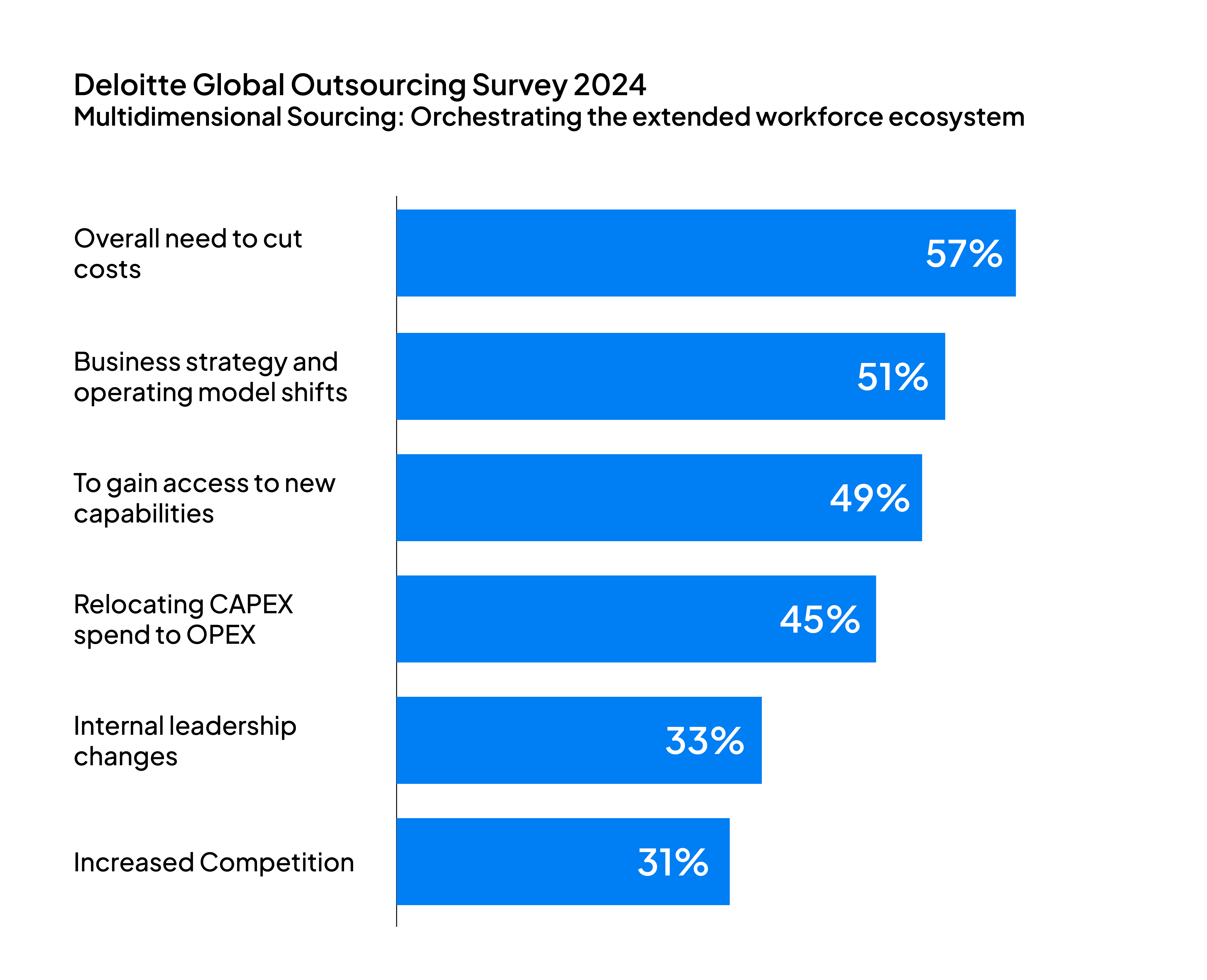
Outsourcing is best when:
- The capability being built would not exist if it were not outsourced (CRO is a great example of this).
- To grow faster, your brand needs the cross-pollination of ideas; you can only get this from external expertise.
- When you cannot afford to get it wrong while capability-building, meaning in-house just isn’t an option at that time.
Outsourcing can help teams establish proven processes and practices and bring cross-industry ideas. The latter is especially valuable in highly competitive or innovative industries.
Remember, working with an agency or freelancers can be done alongside an in-house team using a hybrid model that is project-based or ongoing. The best agencies help organisations determine which parts of the process should be handled internally, ensuring that any external resources focus on where they can make the greatest impact.
In-housing works best when:
- Internal talent is already strong.
- Your brand is highly specialised or heavily regulated.
- Your organisation has a high tolerance for risk or mistakes being made while people build capability.
Real-world examples
The following are two case studies based on real interviews, illustrating what worked and didn’t work in different outsourcing scenarios.
Case study 1: Hiring an agency to work on a full experimentation programme alongside a mature in-house team
An agency was brought in to lead CRO for a well-known e-commerce brand, but they failed to meet expectations.
What happened? The agency imposed a way of working that slowed down the in-house team. They required tools to be purchased that couldn’t be maintained by the e-commerce brand. After three months, the agency produced some wins, but the scale and quality of these were lower than what the in-house team could achieve. As a result, both the client and the agency were frustrated by the partnership.
The problem There was a clear misalignment in ways of working. The agency failed to match the needs of the in-house team. Specific skills and resource gaps needed to be filled, but instead the agency offered the same skills as the effective in-house team.
Case study 2: A short-term engagement with a dedicated data and analytics agency
A newly launched travel website required personalisation, but no clear customer view existed, and web analytics were fragmented across the legacy and new platforms. The BI and data team had indicated that improvements were ‘on the roadmap’ but not expected for two years.
What happened? To speed up progress, the travel brand hired a specialist data and analytics agency. This would help deliver immediate improvements while they continued to push for more resources. The agency had a deep understanding of the travel website’s analytics and provided advanced skill sets that weren’t available in-house. The collaboration led to positive outcomes for both the client and the agency.
The solution Success was achieved because the agency provided niche skills that were needed fast. Outsourcing meant the travel brand could access the necessary skills on a short-term basis and allowed them to maintain strong project management and their core infrastructure in-house. The agency took on the role of guiding the project while complementing the internal team’s skills and roles.
Takeaways from the two case studies
To successfully work with an agency, companies must ensure:
- There is alignment on what and how work will be done.
- The skills being offered by the agency match the skills gaps in-house.
- The agency’s maturity is higher than the in-house team.
- There is clarity of roles.
Agencies are a good option when their expertise fills gaps rather than competing with internal capabilities. The success of any client–agency relationship should be measured by the rate of innovation, ROI and learnings.
Understanding the situation and specific context is key. Get it wrong and both agency and client suffer, as seen in the case study above.
An open conversation with suppliers about how you would like to resource your team and what skills are already available is paramount. This can be hard and a little intimidating, but the following model is designed to guide the conversation and make it more transparent.
The 4Bs Model
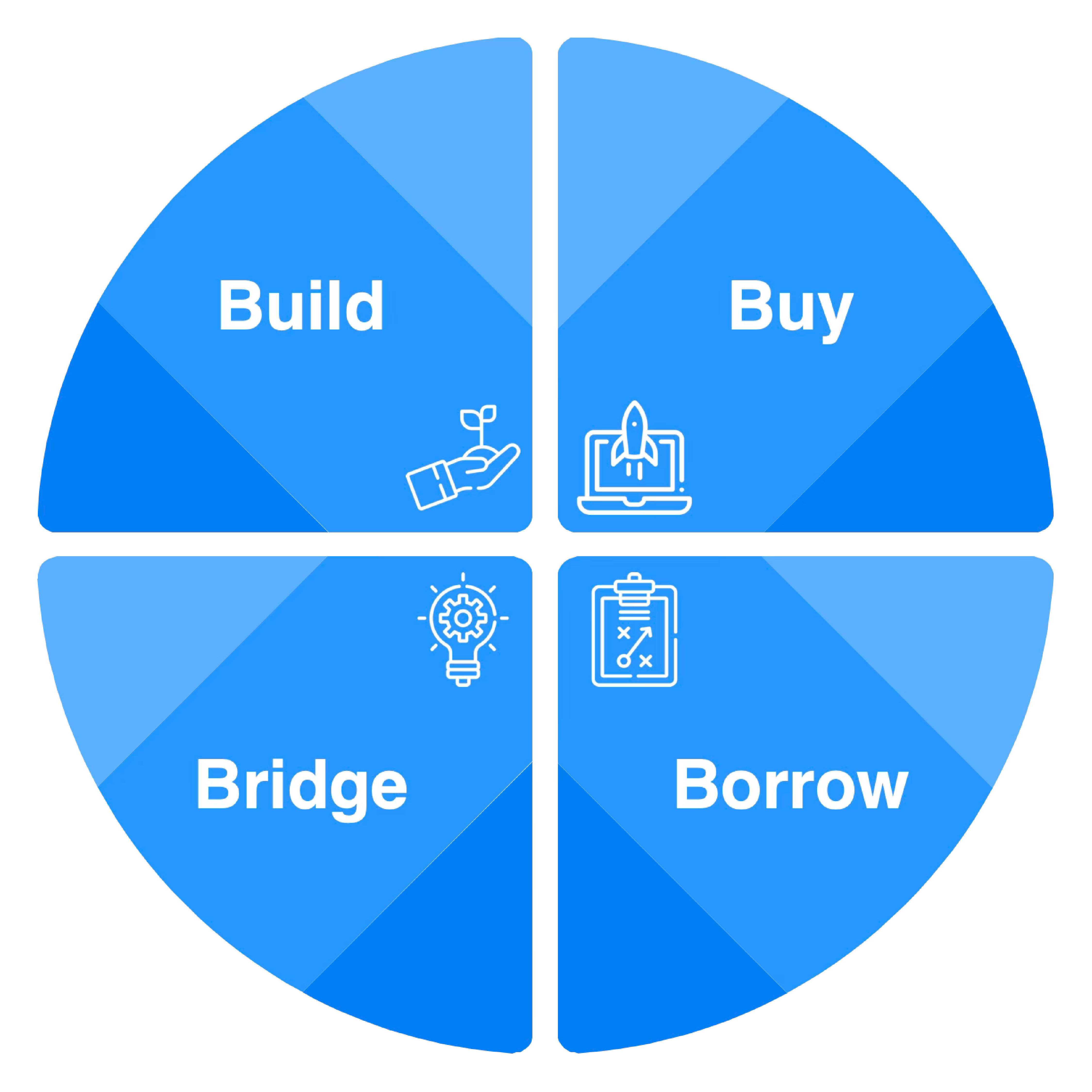
The 4Bs model helps you describe the different ways you can acquire the talent you need, based on the context of your business and team. By setting out what you want to achieve, you can understand what, where and how an agency can help your in-house team more effectively. The 4Bs model is designed to work that out collaboratively.
- Build: Develop internal skills and resources through upskilling existing staff. This also means ensuring knowledge is retained when there is staff turnover.
- Buy: Hire employees to gain fresh perspectives or skills that are difficult to develop internally.
- Borrow: Use part-time, freelance, agency, or contract workers to build processes, cover skills gaps or go faster.
- Bridge: Cover surges in demand and support people as they move between roles.
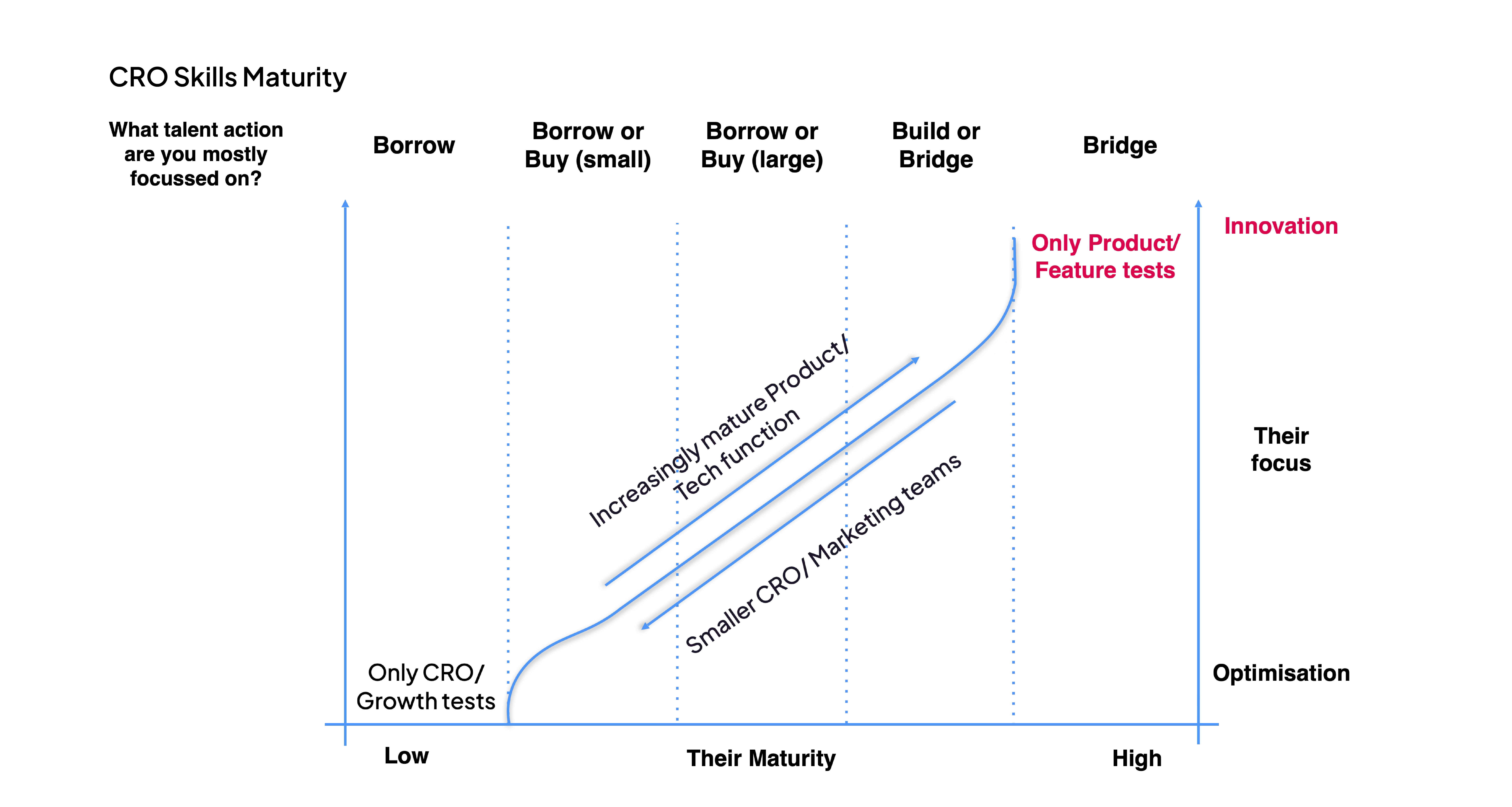
The approach used depends on maturity levels, but generally, all companies need some mix of building enduring internal knowledge, buying specialist skills for complex problems, borrowing resources for temporary capacity, and bridging roles to maintain agility and results. Using the 4Bs model to specify what, where and how each of these options comes into play will make any agency engagement a lot more effective.
Conclusion
Choosing between in-housing and hiring a CRO agency is not a simple ‘build versus buy’ decision. Borrowing and bridging options are equally important, ever more so in today’s hiring environment.
Context, maturity, and goals will inform the decision you need to make about skills and resources. When considering an agency or external partner, ensure they complement any in-house capabilities and that the approach to work and goals are aligned.
If you found this article helpful and want to learn more, you can watch a full-length recording of a presentation on the topic from BrightonSEO below.

.jpg)